Postmodernism has and still is typically defined by an attitude of skepticism, irony or rejection toward grand narratives, ideologies and various tenets of universalism, including objective notions of reason, human nature, social progress, moral universalism, absolute truth, and objective reality. Instead, it asserts to varying degrees that claims to knowledge and truth are products of social, historical or political discourses or interpretations, and are therefore contextual or socially constructed. Accordingly, postmodern thought is broadly characterized by tendencies to epistemological and moral relativism, pluralism, irreverence and self-referentiality.
" Postmodernism ” was a term coined by Arnold Toynbee (1889-1975) early in the century to refer to the last quarter of the 19th century, a time where capitalism and imperialism and Western civilization in general began to decline. For Toynbee, this new period, beginning in 1875 actually coincided with the modernist avant-garde in the art world of Paris. However, Toynbee examining a larger swarth of history and noted the rise of “mass:” mass culture, mass education and mass culture. When he died in 1975, the “post-modern” was already ninety years old but the intellectual world was just beginning to incorporate the concept. At first, in the art world, the term simply meant, “after” Modernism; but by the mid 1970s, Postmodernism came to refer more and more to a theoretical stance, rather than to a temporal event.
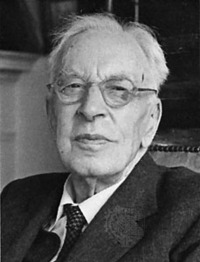
Arnold Tonybee
In simpler words , postmodernism is a general and wide-ranging term which is applied to literature, art, philosophy, architecture, fiction, and cultural and literary criticism, among others. Postmodernism is largely a reaction to the assumed certainty of scientific, or objective, efforts to explain reality. In essence, it stems from a recognition that reality is not simply mirrored in human understanding of it, but rather, is constructed as the mind tries to understand its own particular and personal reality. For this reason, postmodernism is highly skeptical of explanations which claim to be valid for all groups, cultures, traditions, or races, and instead focuses on the relative truths of each person. In the postmodern understanding, interpretation is everything; reality only comes into being through our interpretations of what the world means to us individually. Postmodernism relies on concrete experience over abstract principles, knowing always that the outcome of one's own experience will necessarily be fallible and relative, rather than certain and universal.
Postmodernism is " post " because it is denies the existence of any ultimate principles, and it lacks the optimism of there being a scientific, philosophical, or religious truth which will explain everything for everybody - a characterisitic of the so-called "modern" mind. The paradox of the postmodern position is that, in placing all principles under the scrutiny of its skepticism, it must realize that even its own principles are not beyond questioning. As the philospher Richard Tarnas states, postmodernism " cannot on its own principles ultimately justify itself any more than can the various metaphysical overviews against which the postmodern mind has defined itself. "
Comments
Post a Comment